The Window of Tolerance by Dr. Dan Siegel
- Lidia Korchemnaia
- 11 нояб. 2025 г.
- 3 мин. чтения

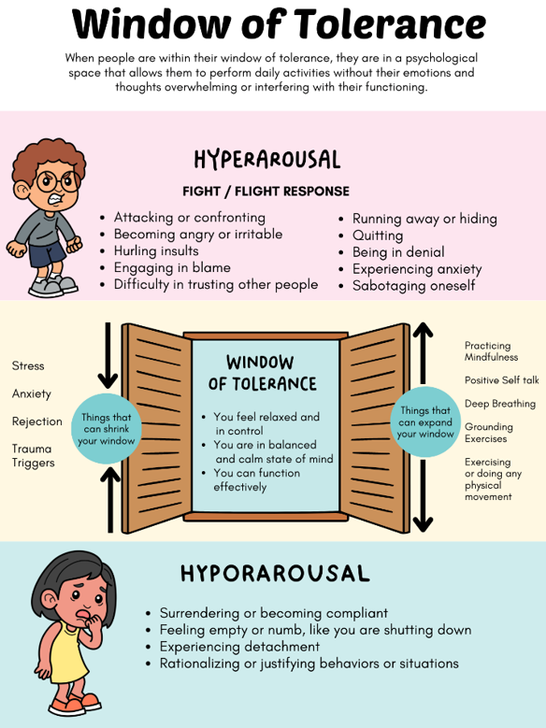
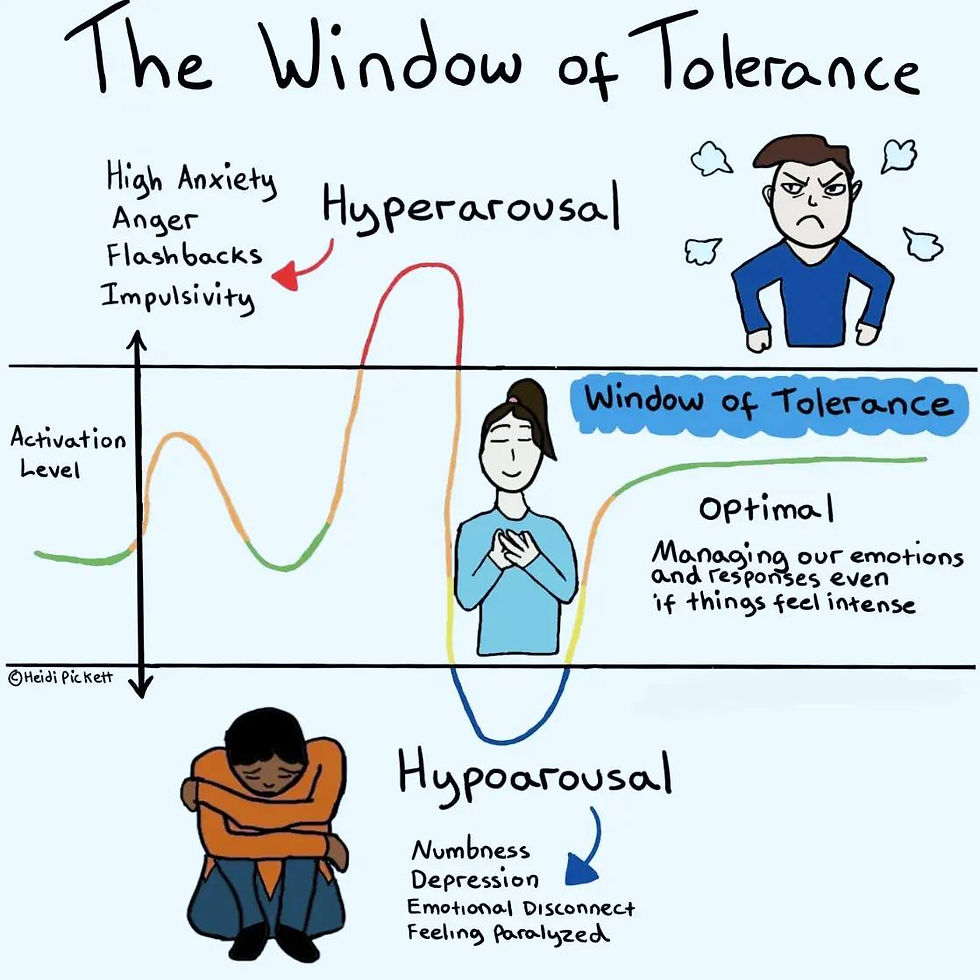
The Window of Tolerance is a concept described by Dr. Dan Siegel, a psychiatrist and researcher in interpersonal neurobiology. It explains how our nervous system responds to stress and emotion, and how much we can handle while still feeling regulated, present, and able to think clearly.
The idea in simple words
We all have a “window” where we feel okay:
emotions feel manageable
we can think, talk, and make decisions
our body feels relatively calm and safe
This is our optimal zone.
When we move outside the window
If stress or emotion becomes too much, we can move into:
1. Hyperarousal (Too Much Activation)
Fight-flight energy.
Anxiety
Anger
Restlessness
Racing thoughts
Feeling overwhelmed
Body is “too switched on.”
2. Hypoarousal (Too Little Activation)
Freeze-shut down energy.
Numbness
Dissociation
Exhaustion
“I can’t feel anything”
Difficulty thinking or responding
Body is “shut down to protect itself.”
Why this matters in therapy (and daily life)
The Window of Tolerance helps us understand:
why someone may react strongly or shut down
how trauma and chronic stress can narrow the window
how supportive relationships, therapy, mindfulness, and safety can widen it again
When your window is wider, you can handle more without becoming overwhelmed or shutting down.
Here are gentle, grounding art therapy exercises designed specifically to help someone return into (or stay within) their Window of Tolerance. These are non-judgmental, low-demand, sensory-based activities that support regulation rather than “expression” or “analysis”.
You can use them for yourself, with clients, or with children.
When someone is in Hyperarousal (anxious, overwhelmed, tense)
Focus on slow, repetitive, rhythmic art-making.This helps the nervous system settle.
1. Slow Colouring Waves
Take a pencil or pastel.
Draw long, slow, wavelike lines.
Let the hand follow your breathing.
No goal. Just repeat the movement.
Why it works: It connects breath + movement, soothing the fight/flight response.
2. Weighted Clay Rolling
Use clay or playdough.
Slowly roll it into a long rope.
Press firmly and evenly.
Why it works: Firm pressure signals safety to the body.
3. Safe Colours Breathing Page
Choose 2-3 colours that feel calming.
Slowly fill the page with them, in any shapes.
Try to match your stroke speed to your breath.
Why it works: Colour can regulate mood, and repetition lowers arousal.
When someone is in Hypoarousal (shut down, numb, dissociated)
Use texture, temperature, contrast, and movement to wake up the senses.
4. Finger Painting Activation
Use cool paint.
Spread with hands.
Notice texture, temperature, pressure.
Why it works: Sensory input gently re-engages the body with the present moment.
5. Collage With Sharp Contrasts
Tear magazine pages or coloured paper.
Create a collage with high contrast colours and bold shapes.
Choose fast, big movements.
Why it works: Stimulates energy and awareness when the system is “flat.”
6. Movement Drawing
Stand up.
Draw while moving your arm in big arcs.
You can play upbeat music.
Why it works: Reintroduces mobilization, which helps come out of a freeze state.
When someone is inside the Window (regulated)
This is when you can do meaning-making or reflective art.
7. Draw Your Window
Draw a rectangle.
Inside: what helps you feel safe and steady.
Outside: signs of hyperarousal / hypoarousal.
Add colours, symbols, images.
Why it works: Builds self-awareness and language for regulation.
Important Facilitation Notes
There is no right way to do any of this.
Avoid “art that must look good.” We focus on process, not product.
Let the person choose colours, materials, pace.


Комментарии