The Spectrum of Emotions: Understanding Yourself Through Plutchik’s Wheel

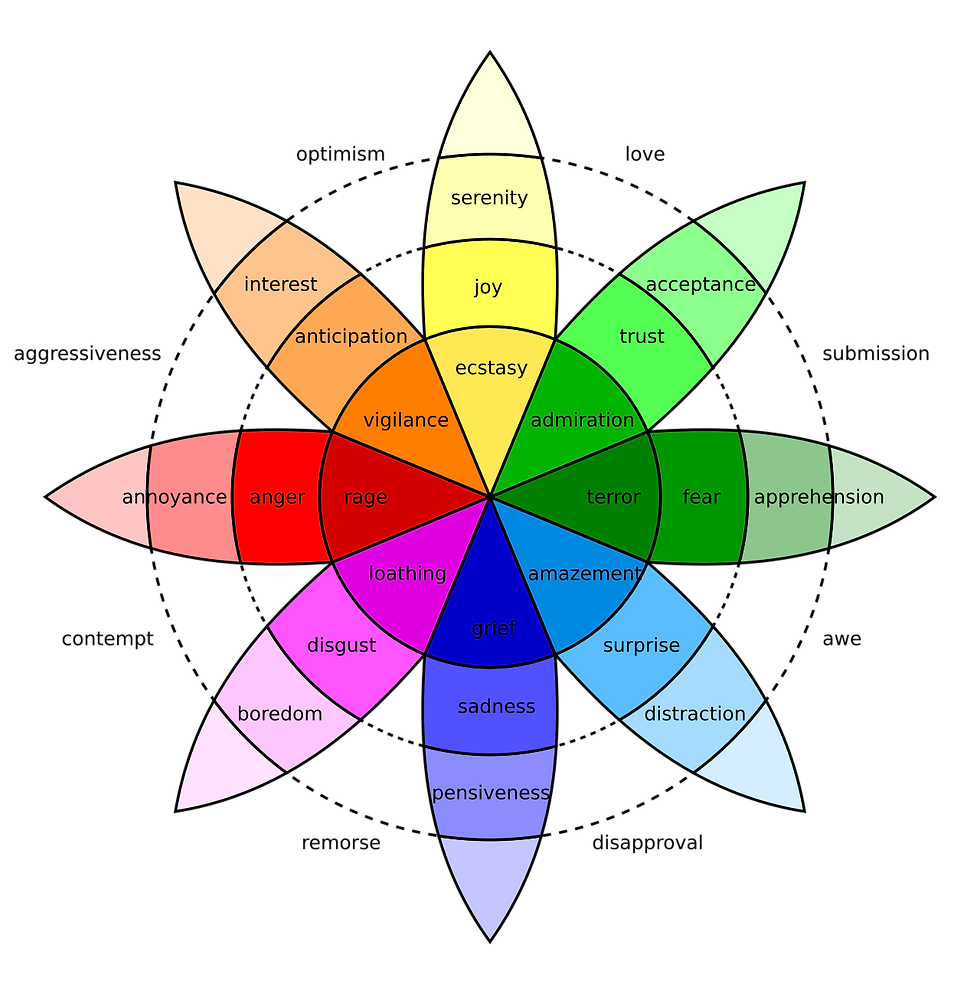
Emotions shape how we think, behave, connect, and make decisions. But often, we experience them as a confusing mix—too intense, too subtle, or difficult to name. Psychologist Robert Plutchik created one of the most influential models of emotion, known as Plutchik’s Wheel, to help us understand what we feel and why.
What Is Plutchik’s Model?
Plutchik proposed that all human emotions stem from eight basic emotions:
Joy
Trust
Fear
Surprise
Sadness
Disgust
Anger
Anticipation
These basic emotions combine and intensify, forming a full spectrum of emotional experience—from mild sensations to powerful emotional states. For example:
Serenity → Joy → Ecstasy
Annoyance → Anger → Rage
Apprehension → Fear → Terror
He presented this as a colourful wheel, showing how emotions blend, oppose one another, and transform.
Why Is Understanding the Emotion Spectrum Important?
1. You learn to name what you really feel
Many people confuse anger with fear, or sadness with shame. The wheel helps you find the precise emotion.
2. You recognise emotional intensity
A feeling can be gentle or overwhelming. Understanding intensity levels helps regulate emotions more effectively.
3. You discover emotional connections
Some emotions are natural opposites—like joy vs. sadness. Knowing this can explain inner conflicts.
4. You gain insight into your reactions
Emotions drive behaviour. By identifying the base emotion, you can better understand why you reacted in a certain way.
How This Model Helps in Art Therapy
In art therapy, Plutchik’s wheel becomes a powerful tool. Through colour, shape, and image-making, clients explore:
What emotion is currently present?
What intensity does it have?
Which emotions are hidden beneath the surface?
What opposite emotion might bring balance?
Art helps externalise what is difficult to verbalise.
Art practices inspired by Plutchik’s wheel may include:
Colour-mapping your emotional state using the wheel as a palette
Drawing the transformation of an emotion as it grows from mild to intense
Creating visual opposites, such as joy vs. sadness
Exploring emotional blends, like trust + joy = love
Developing a personal “emotion atlas” through imagery
What Client Concerns Can This Approach Help With?
Plutchik’s model supports understanding and healing in many areas:
• Emotional confusion or overwhelm
Helps clarify what you feel and why.
• Anxiety and fear-based responses
Shows where fear begins and how it escalates.
• Anger regulation
Helps trace anger back to more vulnerable root emotions.
• Relationship challenges
Reveals emotional patterns in communication and attachment.
• Trauma and past emotional wounds
Provides a safe language for complex emotional experiences.
• Personal growth and self-awareness
Supports building emotional intelligence and resilience.
Why Plutchik’s Model Works
Because it respects how emotions truly function—fluid, interconnected, and constantly changing. When people visualise emotions through colour and imagery, they often gain insights they couldn’t reach through words alone.
Understanding your emotional spectrum is the first step toward healing, growth, and inner balance.


Комментарии