Creative Approaches in Supporting Children Who Struggle to Express Themselves with Words
- Lidia Korchemnaia
- 4 нояб. 2025 г.
- 3 мин. чтения

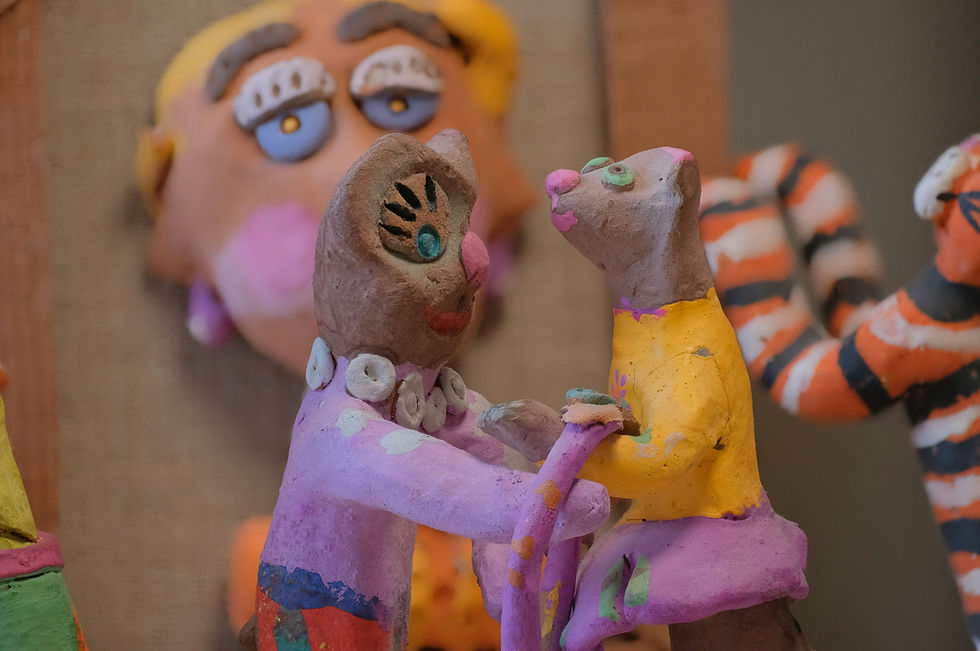
Children do not always have the words to describe what they feel, especially when they have experienced stress, change, or trauma. Play and creative arts therapies provide children with alternative languages — the languages of image, movement, sound, and imagination — to express and process their inner world safely.
Below are several reasons why creative approaches are particularly helpful and effective when working with children who find verbal communication difficult.
Empowerment
Creative arts and play therapy naturally support a sense of empowerment and self-efficacy. Through painting, drawing, building, or imaginative play, children become active participants rather than passive victims. This sense of mastery is especially healing for those who have experienced situations beyond their control — such as neglect, loss, or interpersonal violence.
Externalization
When children externalize their inner experiences through images, objects, or stories, something powerful happens. A puppet show, a sand tray scene, or a drawing can reveal feelings that are difficult to put into words. These external forms allow children to see, shape, and begin to make sense of their emotional worlds.
Symbol and Metaphor
Both art and play use metaphor and symbolism — the natural languages of children. Through symbols, children can explore emotions that may otherwise feel too overwhelming. For example, a stormy sky in a painting may represent anger or fear, while a house might symbolize safety. Symbolic expression gives children control over how deeply they engage, allowing them to communicate safely at their own pace.
Miniaturization
Play and creative arts allow children to transform “big problems” into smaller, more manageable forms. A child might use puppets to tell a story, draw a family scene, or arrange figures in a sand tray. This process of “shrinking” a problem helps them feel capable of managing and mastering difficult experiences.
Playfulness
Play invites joy, curiosity, and imagination — qualities that open the door to healing. When children play, they step outside the pressures of time and expectation. This playful space lowers anxiety and makes emotional exploration feel safe and natural.
Containment
As noted by Lenore Terr (1983), children tend to play out or act out their traumatic experiences. Creative activities offer a safer alternative: they allow children to symbolically express painful memories through art, music, or movement. This symbolic containment prevents overwhelming emotional release and provides structure for healing within the therapeutic process.
The Role of the Therapist
Therapists who work effectively with children are genuinely curious about their play, imagination, and creativity. They create safe, trusting environments where every mark, story, or gesture is seen and respected as meaningful communication.(Source: Malchiodi, C. A., & Crenshaw, D. A. (Eds.). (2017). What to Do When Children Clam Up in Psychotherapy: Interventions to Facilitate Communication. Guilford Publications.)
Try This at Home: A Simple Creative Practice for Parents and Children
The “Feelings Garden” Activity 🌱You can try this gentle exercise at home to encourage emotional expression through creativity:
Together with your child, draw a garden on a large sheet of paper.
Invite your child to add plants, trees, or flowers that represent different feelings. For example, a big strong tree for feeling safe, a wilting flower for sadness, or bright flowers for happiness.
Talk about each element together — ask what each plant might “need” to grow or feel better.
If your child prefers not to talk, that’s okay — the act of creating already supports emotional awareness and regulation.
This small shared activity can nurture connection, communication, and understanding — without needing many words.


Комментарии